How to Get Your First 100 Customers on Shopify Without Wasting Money on Ads
Getting your first customers is one of the biggest challenges for a new Shopify store. Discover practical ways to build trust, reach the right audience, and generate early sales without depending entirely on advertising.
How to Get Your First 100 Customers on Shopify Without Wasting Money on Ads
Introduction
Launching a Shopify store is exciting. You choose your products, build your website, customise the design, and prepare to start selling. Then the store goes live, and something unexpected happens: very few people visit, and even fewer place orders.
This is a common challenge for new e-commerce businesses. A functioning website is only the starting point. Customers still need to discover your products, understand their value, trust your brand, and feel confident enough to buy.
The good news is that you do not necessarily need a large advertising budget to begin attracting customers. You need a clear offer, a defined audience, and a practical plan for reaching people who are likely to be interested in what you sell.
Here are seven steps to help you work towards your first 100 Shopify customers without wasting money on marketing that has not been properly evaluated.
1. Define Exactly Who Your Products Are For
Before spending money on promotion, become specific about your ideal customer.
Trying to sell to everyone makes it difficult to create relevant messaging or choose effective marketing channels.
Ask yourself:
Who is most likely to need my products?
What problem do the products solve, or what desire do they fulfil?
What would make someone choose my store over another option?
Where do these potential customers look for recommendations and product information?
For example, a store selling accessories for a particular motorcycle model has a more identifiable audience than a store simply selling general accessories. That specificity can guide product descriptions, content topics, partnerships, and customer outreach.
You do not need to know every detail about your customers immediately. Start with a reasonable audience profile, then refine it as you learn from real enquiries and orders.
2. Give Customers a Reason to Choose Your Store
A new store often competes against businesses with established reputations, customer reviews, and repeat buyers.
Your job is to explain why a shopper should consider buying from you.
Your advantage might be a specialised product range, clearer product information, a useful bundle, distinctive design, responsive support, or a shopping experience tailored to a particular audience.
Make that value visible on your homepage and product pages.
Avoid relying on vague claims such as “best quality” or “number one store” without evidence. Explain what makes your products useful and support your claims with accurate specifications, real images, transparent policies, and genuine customer feedback.
When shoppers can understand the value of your offer quickly, they have a stronger reason to explore your products.
3. Start With People Who Already Have a Relevant Interest
You do not need to begin by reaching thousands of strangers.
Look for places where people already discuss the products, interests, or problems connected to your business.
Depending on your niche, these could include relevant social media communities, specialist forums, creator audiences, professional networks, or local business groups.
Participate genuinely. Answer questions, share useful information, and introduce your products when doing so is relevant and permitted by the community's rules.
For instance, a beauty brand could collaborate with small beauty creators whose audiences match its products. A store selling specialist sports equipment could contribute useful advice in relevant enthusiast communities.
Avoid spamming groups with repeated links. The goal is to build visibility and credibility with the right people, not simply to distribute as many promotional messages as possible.
4. Make Your Products Easier to Find on Google
Search engines can help connect your store with people who are already looking for products like yours.
Start with your most important product and collection pages. Use descriptive titles, clear product details, helpful headings, and accurate meta descriptions. Make sure the pages are accessible to search engines and that your product information answers common buying questions.
Consider the actual phrases a potential customer might use when searching.
Someone looking for a specific product may use a model name, size, material, intended use, or other distinguishing feature. Where relevant, include those details naturally in your page content.
You can also publish useful articles that answer questions customers ask before buying. These articles should provide real value rather than repeat keywords without substance.
Google Search Console can help you monitor which pages appear in search results and which queries bring visitors to your website.
Organic visibility usually takes time to develop, so treat it as a long-term channel rather than a promise of immediate sales.
5. Build Partnerships That Put Your Products in Front of Buyers
Partnerships can introduce your store to audiences you would otherwise struggle to reach.
Depending on what you sell, potential partners might include content creators, complementary brands, professional service providers, retailers, or businesses that regularly serve your target audience.
Start by identifying a small group of relevant prospects. Learn about their audiences and consider what would make a partnership worthwhile for both sides.
Possible arrangements include product demonstrations, affiliate commissions, referral agreements, co-created content, or wholesale offers where your products and margins make that model suitable.
If you sell products that retailers can resell, prepare the information they need to evaluate a bulk order. This may include wholesale pricing, minimum order quantities, stock availability, delivery arrangements, and expected margins.
Do not assume every partnership will generate sales. Begin with clear terms, measure the response, and invest more effort in relationships that demonstrate genuine potential.
6. Encourage Your First Customers to Come Back
Your first order is important, but a positive customer experience can also create opportunities for repeat purchases and recommendations.
Make the buying process straightforward. Communicate delivery expectations clearly, respond to customer questions, and provide appropriate support after an order.
Where customers have given permission to receive marketing, use email to share useful product information, relevant new arrivals, or complementary products.
You can also ask satisfied customers for honest feedback and invite them to share their experiences. Never manufacture reviews or offer misleading incentives for positive ratings.
Repeat purchases will depend on your product category, customer needs, and buying frequency. Even so, treating existing customers well gives your business a stronger foundation than constantly searching for new buyers while neglecting previous ones.
7. Track Your Progress Before Increasing Your Spending
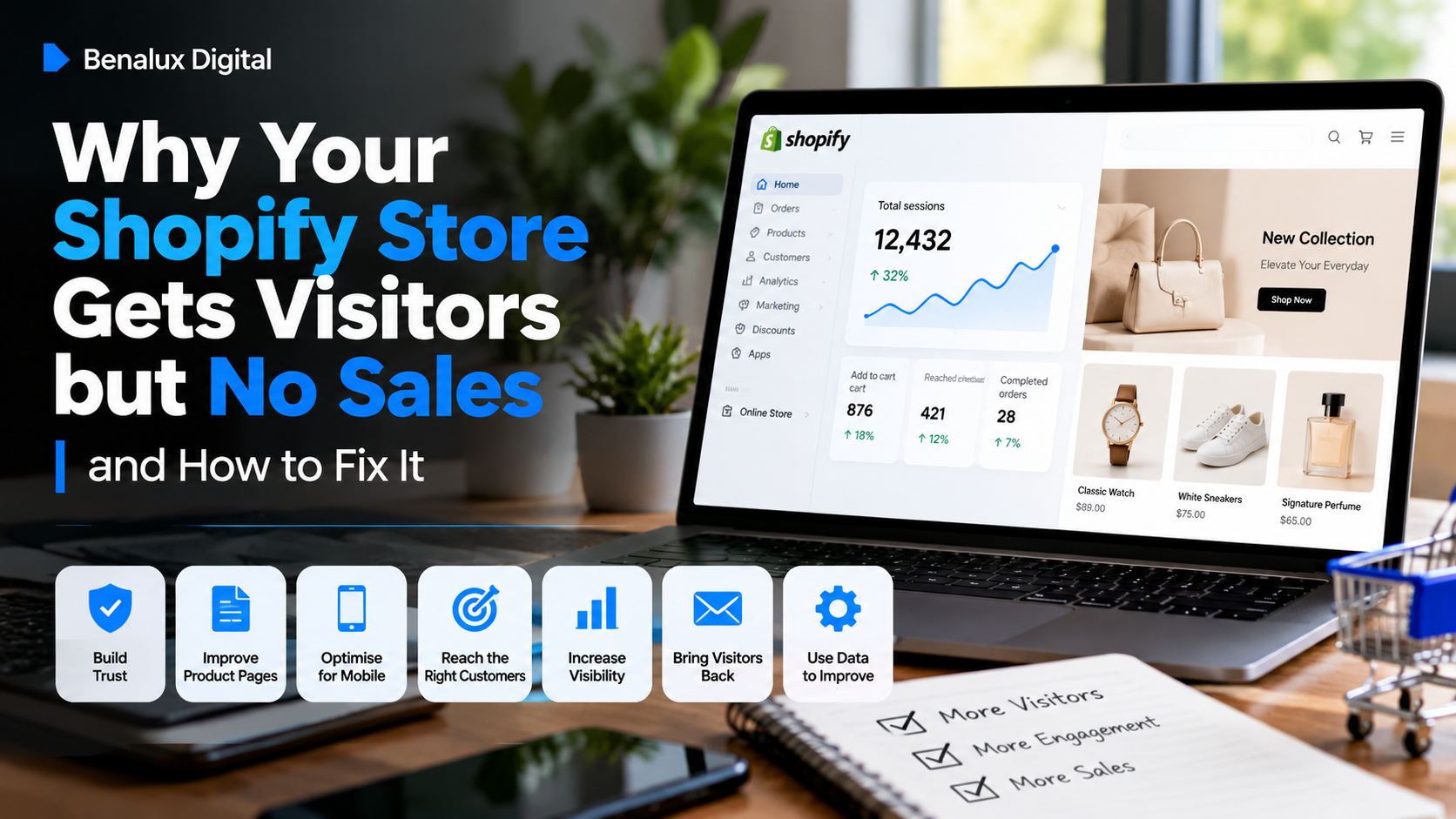
It is tempting to measure progress only by the number of sales. However, early-stage stores can learn a great deal from customer behaviour before they reach their sales targets.
Track useful indicators such as:
Relevant website visits.
Product-page engagement.
Add-to-cart activity.
Checkout starts and completed orders.
Customer enquiries and their sources.
Repeat purchases, where applicable.
If people visit but do not explore products, investigate the relevance of your traffic and your website's first impression.
If they view products but do not add them to their carts, review the product presentation, price, value proposition, and trust information.
If they begin checkout but abandon it, investigate shipping charges, payment options, delivery estimates, and other potential obstacles.
These are starting points for investigation, not guaranteed explanations. Use the evidence available to identify what deserves attention.
Only increase marketing expenditure when you have a clear reason to expect it will help, and set a budget you can afford to lose while learning.
A Simple 30-Day Plan for a New Shopify Store
You can organise your first month around four practical priorities.
Week 1: Strengthen your foundation. Clarify your target customer, improve your key product pages, check mobile usability, and make shipping and returns information easy to find.
Week 2: Start building visibility. Improve important search pages, publish useful content, and identify relevant communities where you can participate appropriately.
Week 3: Develop relationships. Contact a small number of suitable creators, complementary businesses, or retailers with personalised partnership proposals.
Week 4: Review the evidence. Examine traffic, enquiries, product engagement, and sales. Identify which activities produced the most promising response and decide what to improve next.
Your first 100 customers may take longer than a month, depending on your products, pricing, market, and starting audience. Treat this plan as a structured starting point, not a guaranteed deadline.
Final Thoughts
Getting your first customers on Shopify does not require you to spend money on every marketing channel at once.
Begin by understanding your audience, presenting a compelling offer, improving the shopping experience, and reaching potential buyers through relevant channels. Build relationships, make your products easier to discover, and use actual performance data to guide your next decisions.
The objective is not simply to attract visitors. It is to build a repeatable way to reach suitable customers, earn their trust, and give them a good reason to buy.
Need Help Growing Your Shopify Store?
Benalux Digital helps Shopify brands identify growth opportunities, strengthen their online stores, improve search visibility, and develop customer acquisition strategies suited to their businesses.
Our performance-based partnership model has no upfront agency service fee. The scope of work, any marketing budget, paid tools, and performance-based compensation are discussed and agreed upon before work begins.
If you want a clearer view of what could be improved in your store, visit BenaluxDigital.com to learn more about our approach.
This article provides general e-commerce guidance. Customer acquisition costs, sales volumes, and business results vary by store, audience, market, and implementation.
Want this applied to your store?
See how we work — fixed-price services or a performance-based partnership.